

What to Do With Kids' Artwork: Keep the Best Without Keeping It All
Children make a lot of art. One ordinary week can bring home a stack of paintings, a paper-plate lion, three drawings of the same cat and something involving dried pasta. Multiply that by a school year and the kitchen table starts to disappear.
If putting any of it in the recycling makes you feel guilty, you're far from alone. It's one of the most common questions in every decluttering forum going. The good news is that you don't have to keep everything to keep what matters.
The short answer: photograph everything worth remembering, keep one small box of originals per school year, display a few pieces at a time and swap them often, and turn the real favourites into something you'll use, like a book, a card, a gift or a creature brought to life. Let your child choose some of what stays.
How much of your child's artwork should you keep?
Less than you think, and more than nothing. A simple rule plenty of families settle on is one box or folder per school year. Whatever fits, stays. Once it's full, something has to leave before anything new goes in.
A few questions make the choosing easier:
- Does it have a story? The drawing they explained for ten minutes beats the neat worksheet.
- Is it a first? First face, first time they wrote their name, first drawing of the whole family.
- Did they pick it? Give your child a vote. They'll often choose something you'd have overlooked.
- Is it mostly someone else's work? Craft kits and heavily guided school projects are usually the easiest to let go.
Before anything goes into the box, write their name, age, the date and one line of what they said about it on the back. Ten years from now, "Rex, a dog who guards the moon, age 5" will be worth more than the picture itself.
How do you photograph kids' artwork so it's worth keeping?
A photo archive lets you keep everything without storing everything. Set it up once, and the recycling bin stops feeling like a betrayal.
- Lay the artwork flat near a window in daylight. Skip the flash, which leaves a glare spot.
- Hold the phone directly above the paper, level with it, and fill the frame.
- Use a document scanner to straighten the edges. iPhones have one built into the Notes app, and the Google Drive app has one on Android.
- Take a second shot of your child holding the piece. Those are often the photos you'll love most, because you can see how small they were.
- Keep one album per school year, and back it up somewhere other than your phone.
How can you display kids' artwork without covering every wall?
The trick is rotation. A small display that changes often feels special. A fridge buried under forty pieces doesn't.
- Front-opening frames. Often sold as kids' art frames, they let you slide a new piece in without taking anything apart. Many hold a stack inside, so older pieces are stored right behind the newest one.
- A wire and pegs. String or wire with clothes pegs along a hallway or above a desk. Cheap, cheerful and easy to change every week.
- Clipboards on hooks. A neat row of clipboards makes a tidy gallery wall, and each one can be updated in seconds.
- Artist of the week. One frame, one piece, changed every Sunday. Your child chooses what goes in.
- A digital photo frame. Load the photo archive onto one and years of artwork will cycle past on their own. Grandparents love these as gifts.
How do you store the originals?
Flat, dry and labelled. Paintings crack when they're folded and crayon smudges when pieces rub together, so a flat artist's portfolio or a shallow under-bed box works far better than a drawer. Keep one per school year and write the year on the outside. Avoid attics, garages and basements, where damp and heat do the most damage.
Clay models and 3D projects are the exception. Photograph them from a couple of angles, keep one or two true favourites, and let the rest go.
How can you turn kids' artwork into something new?
This is where the pile starts earning its keep. Here are some ideas, from simple to more involved.
Make a book
Print a photo book of the year's best pieces using your photo archive and any photo book service. Add the date and your child's own words under each one. If you'd rather hand the whole job over, services such as Artkive send you a box to fill with artwork, then photograph every piece and design a book for you to approve.
Use it as wrapping paper and cards
Big paintings make brilliant wrapping paper, especially for presents to grandparents. Smaller drawings, trimmed down and folded, make birthday cards that people actually keep.
Print it on everyday things
Mugs, tote bags, cushions, calendars and T-shirts can all be printed from a good photo. A calendar with twelve drawings from the year is one of the easiest grandparent gifts there is.
Turn a drawing into a toy
Companies such as Budsies sew custom soft toys from children's drawings. It's a handmade toy with a price to match, so save it for the drawing everyone loves most.
Bring a creature to life
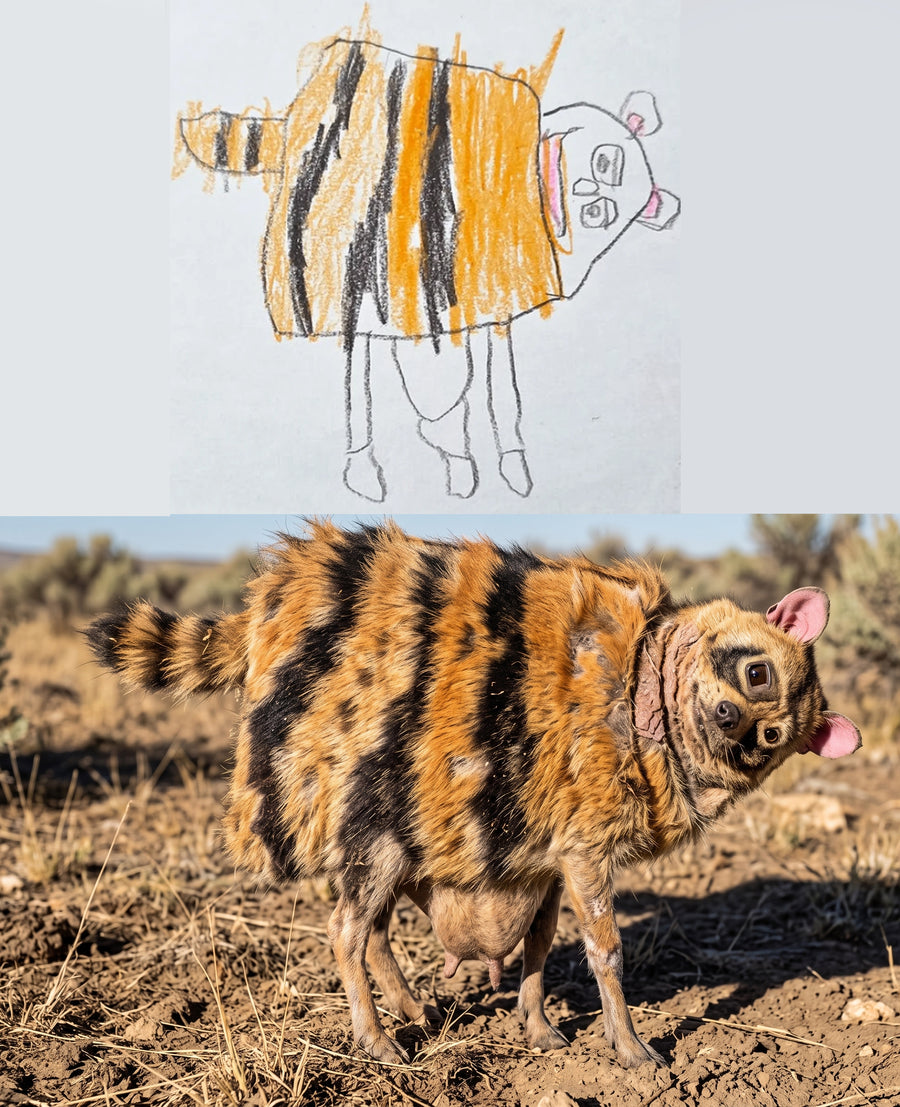
If your child draws animals, try turning one into a photograph of the real thing, with every extra leg and wonky ear kept. Here's our step-by-step guide to turning a drawing into a real animal. We also made Crayon to Creature for parents who'd like it done from a phone in a few minutes. Print the photo next to the original drawing and you have a pair worth framing.
Send it somewhere
Grandparents, aunts and uncles, a godparent overseas. A drawing that turns up in the mail is a small event for whoever opens it, and it's one less piece on your table.
How do you let go of the rest without upsetting your child?
Involve them, at least some of the time. A child who helps choose the keepers at the end of each term usually minds much less about the rest.
- Photograph before anything leaves the house.
- Don't throw artwork away in front of them, and put it at the bottom of the recycling.
- If they ask to keep something, keep it for now. You can look at it together again next term.
- Explain the system: "The best ones go in your box, and we have photos of all of them."
Why does the conversation matter more than the keeping?
What you keep matters less than how the art gets talked about in the first place. Early-years specialists at Michigan State University Extension suggest asking "Tell me about your picture" rather than "What is it?" That way a child gets to explain the idea, without feeling it should have looked like something else.
Praise lands best when it's about what they did. In a 2013 study in Child Development, toddlers whose parents more often praised their effort and actions were more likely, at seven or eight, to believe that abilities grow with effort. "You used so many colours in that sky" does more than "You're a great artist." It's also exactly the kind of detail worth writing on the back before a piece goes in the box.
Keeping a favourite animal drawing? See it as a real creature, framed right next to the original.
Frequently asked questions
What is the best way to preserve children's artwork?
Photograph everything worth remembering in daylight, then keep a small number of originals flat in a labelled portfolio or shallow box, one per school year, away from damp attics and basements. Write the date, your child's age and their own description on the back of each piece.
How do I turn my child's artwork into a book?
Photograph the pieces flat in daylight, then use any photo book service to lay them out, one per page, with the date and your child's words underneath. If you'd rather not do it yourself, services such as Artkive will photograph a box of originals and design the book for you.
Should I keep all of my child's artwork?
No. For most families, keeping a few meaningful originals and photographing the rest is plenty. Pieces with a story, a first, or your child's own vote are the ones worth keeping. Craft kits and heavily guided projects are usually the easiest to let go.
How can I turn my child's art into a gift?
Print it on a calendar, mug or card, use a big painting as wrapping paper, or frame a single piece for a grandparent. For animal drawings, a photo of the creature brought to life, framed next to the original, makes a gift people tend to keep.
Keep the stories, keep a few favourites, and let go of the guilt. The paper was only ever part of it.